






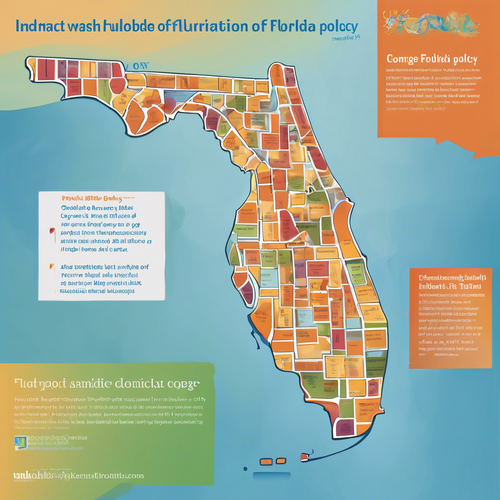
Florida’s Fluoride Change: A Big Step Backward for Public Health
In a state lauded for its commitment to public health, recent legislative changes have sparked a heated debate over a substance known for its role in preventing tooth decay. Florida’s decision to reduce fluoride levels in community water systems is more than a regulatory adjustment; it raises significant concerns about the future of dental health for millions of residents. As the state backtracks on a key public health initiative, many experts warn that this move could have dire consequences for children’s and adults’ dental health alike. 🦷💧
The Science of Fluoride: Why It Matters
Fluoride, a naturally occurring mineral, has been recognized by the American Dental Association (ADA) and the Centers for Disease Control and Prevention (CDC) as a vital element in oral health. Research indicates that community water fluoridation can reduce tooth decay by approximately 25% among children and adults. Yet, the debate is polarized, with proponents praising its preventive capabilities and opponents citing potential health risks associated with excessive exposure.
According to the CDC, nearly 75% of Americans served by public water systems receive fluoridated water. The move to cut fluoride levels to previously unfavored thresholds, however, risks returning Florida to a time when dental health disparities were rampant, especially among vulnerable populations. 📉
The Implications of Reduced Fluoride Levels
Reducing fluoride in drinking water poses serious implications for dental health, particularly in communities where access to dental care is limited. Studies consistently show that children in fluoridated areas experience significantly lower rates of dental cavities compared to those in non-fluoridated regions. Indeed, a study published in the journal Community Dentistry and Oral Epidemiology found that children who missed preventive dental services faced a 55% higher incidence of cavitations when fluoride levels were suboptimal.
Key Statistics:
- 25%: Reduction in tooth decay attributed to optimal fluoride levels.
- 80%: Children aged 6-11 in non-fluoridated communities experienced higher dental decay rates.
- 1 in 4: Children in the U.S. have untreated cavities.
A Public Health Dilemma: The Response from Experts
Florida’s decision has drawn ire from dental and public health professionals alike. Dr. Melissa Brown, a pediatric dentist in Miami, warned, “This policy shift not only undermines decades of progress but also potentially exacerbates issues of health inequity, as low-income families often lack the means to afford dental treatments and fluoride supplements.”
“Fluoride is one of the most effective tools we have for public health. By reducing its prevalence in water, we may be setting ourselves up for a public health crisis,” says Dr. Johnathan Keyes, an oral epidemiologist. “
The Dangers of Misconceptions about Fluoride
While concerns regarding fluoride consumption are not unfounded, they often stem from misconceptions. Critics have raised alarms over potential links to conditions such as dental fluorosis, thyroid dysfunction, and even neurodevelopmental issues. However, leading health organizations assert that when used appropriately, fluoride is safe and beneficial. The key lies in maintaining appropriate levels that balance efficacy against potential risks.
The Future of Dental Health in Florida
As Florida pivots away from fluoridation, many are left wondering what the future holds for dental health within the state. Community programs designed to educate families about oral hygiene and preventive care are essential to mitigate the impending risks. However, without state-supported initiatives to provide comprehensive dental care and fluoride alternatives, the challenge will be daunting.
Public Opinion: Divided Views on Fluoride Reduction
The sentiment among Floridians is as varied as the diverse landscape of the state itself. Some community members feel reassured by the shift, believing it will prevent potential overexposure to fluoride. Others, however, see it as a retreat from scientific consensus on dental health best practices. A recent survey indicated that 62% of Florida residents support community water fluoridation, revealing a significant disconnect between public opinion and legislative action. 🗳️
Conclusion: A Call for Reevaluation
As Florida embarks on this controversial course, the words of public health advocates echo in the air: Policy changes should be based not on anecdotal fears but solid scientific evidence. As long-held standards are challenged, the state risks dismantling a fruitful public health initiative and exposing its citizens to a resurgence in dental problems. It is time for state lawmakers to reevaluate this decision and listen to public health experts who advocate for access to safe, effective preventive measures. The health of future generations hangs in the balance. 🌟



I think the fluoride debate is complex, but maybe we should focus on overall dental health strategies instead of just fluoride levels.
Is it just me or does anyone else find this fluoride debate more confusing than trying to assemble IKEA furniture without instructions?
I believe the fluoride debate is complex. Lets discuss how it impacts our health and if the change is truly beneficial.
Im not convinced fluoride is really that important. Maybe were all getting worked up over nothing. Thoughts?
Is it just me or does anyone else think Floridas fluoride policy change is like taking two steps back in public health? Lets discuss!
I dont buy it! Fluoride is crucial for dental health. Lets not take a step backward in public health progress.
I think the fluoride debate is like a never-ending rollercoaster ride! Who knew something as small as fluoride could cause such a stir?
I cant believe theyre messing with fluoride levels! Whats next, banning toothpaste? Public health needs fluoride!