






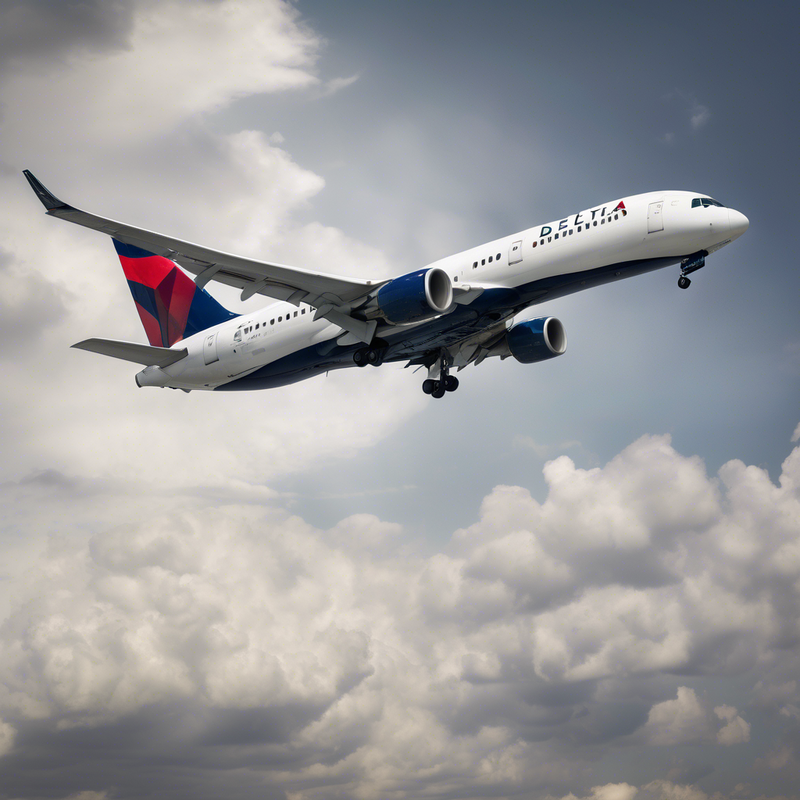
Part of Delta Plane Wing Breaks Off Mid-Flight: What Happened? ✈️😱
In a stark reminder that our lives can often hang by a thread—sometimes literally—part of a Delta Airlines plane’s wing broke off mid-air during a routine flight. This incident, which could easily be mistaken for a scene out of a B-rated disaster movie, has raised eyebrows, safety concerns, and perhaps a chuckle or two at the irony of our fast-paced reliance on air travel.
As the aircraft soared through the skies, passengers were likely blissfully unaware that part of their vessel was shedding metal like a snake sheds its skin. This juxtaposition—flying high while something crucial was falling off—presents an intriguing study in contrasts: the seemingly infallible modern engineering versus the stark reality of mechanical failure.
The Incident: A Piece of Wing Goes Walkabout
Reports surfaced after flight DL 1234 experienced an unceremonious loss of part of its wing shortly after takeoff from Atlanta, bound for New York. Eyewitness accounts depicted a scene filled with bewilderment as a jagged piece of the wing fluttered to the earth like a leaf tossed by the wind. What could be mistaken for a hallucination or a scene from “Final Destination” turned out to be an all-too-real ordeal for the passengers on board.
Delta Airlines was quick to respond. In a statement, they emphasized their commitment to safety and compliance with rigorous maintenance checks, asserting that their aircraft undergo strict inspections before takeoff. However, the incident ignites a perennial question: how often can one trust the nail-biting reliability of aviation technology before one becomes accustomed to the unexpected?
According to the National Transportation Safety Board (NTSB), wing failures constitute a minuscule percentage of aviation incidents, occurring at a rate of about 0.002% of all flights. Nevertheless, each incident can provoke global unease.
Human Experience: The Passengers’ Consequence
Among those on board, reactions likely ranged from shock to disbelief as the reality sunk in. One can only imagine the tumultuous thoughts racing through their minds: “Will I ever fly again?” or “Did I remember to turn off the stove?” As unsettling as it is to joke about, the psychological aftermath of such an experience may linger long after the plane safely reaches its destination.
The Aftermath: Reactions from Delta and the Expert Community
In the wake of the incident, Delta Airlines expressed their deep concern for the passengers’ well-being, ensuring compensation and counseling for those affected. Meanwhile, experts are weighing in—air safety analysts have highlighted the importance of post-flight inspections and the potential ramifications for aircraft manufacturers involved. Irony abounds, as flight restrictions increase when equipment failures appear, yet paradoxically, air travel remains one of the safest modes of transportation.
Is Air Travel Safe? Navigating the Waters of Fear and Reality
The paradox of flying continues: an unwavering faith in technology colliding with the primal fear of failure. For every complex piece of machinery, like the high-tech engines powering modern planes, one can juxtapose the fragility of human existence. When does faith become delusion? How much metal can one afford to lose before questioning the integrity of the airways?
Amid the cacophony of sensational headlines, one must remember the efficacy of aviation safety protocols. Experts stress that safety records and technological advancements continually shape the landscape of air travel. But would you still feel comfortable lounging at 30,000 feet if you knew a part of your plane’s structure was casually drifting below? In this untimely incident, the real challenge is not just safety itself, but how we reconcile our feelings towards it.
The Future of Air Travel: Adaptation and Trust
As engineers investigate what went wrong on that fateful flight, the incident serves as a stark reminder that midst technological advancements, unpredictability can lay just beyond the horizon. Thus, how can we ensure such an event does not repeat? Should we strengthen regulations, call for more thorough inspections, or perhaps establish a system of transparency that allows consumers to track the real-time status of their aircraft’s components?
Ultimately, the heart of aviation lies not merely in metal and engines but in the people who ride within. The incident draws a vivid parallel to navigating the delicate tapestry of life—momentarily suspended between earth and sky, we are reminded of our fragile existence. And perhaps, in that realization, we find newfound respect not just for the mighty machines that carry us, but for each other.
As the investigation continues, one might consider: how much faith do we place in our technology, and how prepared are we for a world where the unexpected is all but inevitable? 🌍✈️



Wow, can you imagine being on that Delta flight when the wing broke? Must have been terrifying! What do you think caused it?
Wow, can you imagine being on that flight when part of the wing broke off? Scary stuff! I wonder what caused it. 🤔✈️
Wow, can you imagine being on that Delta flight when part of the wing broke off? Scary stuff! I wonder how theyll prevent it in the future.
Wow, can you imagine being on that flight? Would you still trust Delta after this? Id be terrified!
Wow, can you imagine being on that flight when the wing broke off? Would you stay calm or panic? 😱✈️
Wow, can you imagine being on that Delta flight when the wing broke?! Crazy stuff, glad everyone made it out okay.
Can you imagine being on that flight? Terrifying! Makes you appreciate safe landings even more. ✈️😱 #DeltaAirlinesWingBreak #StaySafe
Wow, imagine being on that flight when the wing just decides to take a little stroll mid-air. Thats a whole new level of turbulence! 🛫😳