






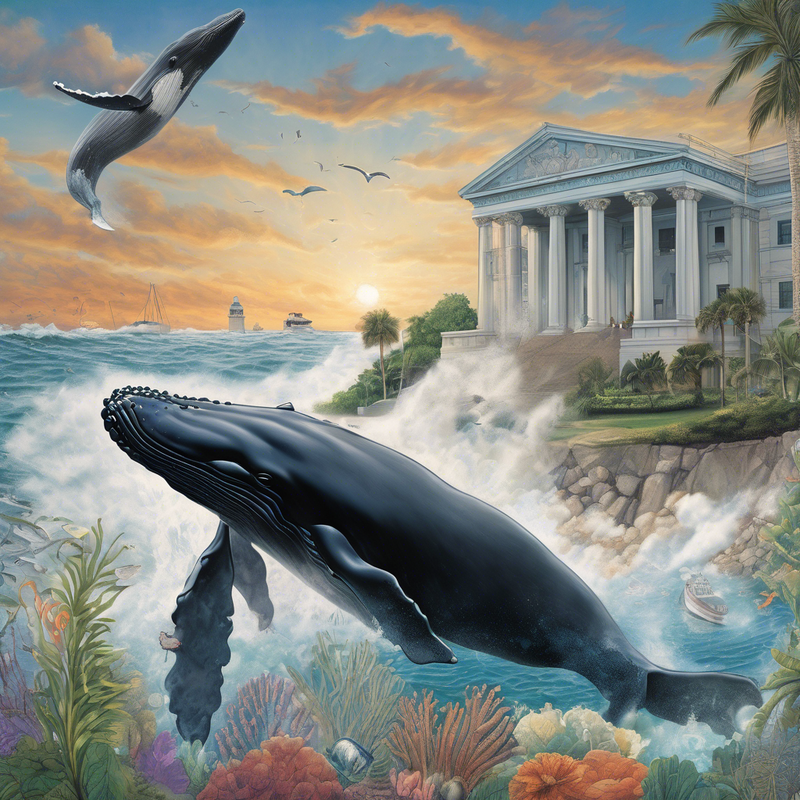
Florida’s Judicial Dilemma: Protecting Whales or Hardening Regulations? 🐋⚖️
In an unexpected twist of legal fate, a Florida judge recently ruled to keep certain environmental groups from joining the defense of a crucial regulation designed to protect the endangered right whale. This regulatory measure, aimed at safeguarding one of the ocean’s most vulnerable inhabitants, stands at a crossroad, much like a ship navigating turbulent waters. Perhaps it’s a poignant irony: while the law seeks to shield the very essence of marine life, it simultaneously erects barriers that may prevent advocates from assisting in its defense. 🌊
The Backstory: Whales in Distress
The North Atlantic right whale, a majestic creature that once roamed freely in great numbers, now finds itself perched precariously on the brink of extinction. With fewer than 340 individuals remaining, each whale is as precious as a drop of rain in a parched desert. According to federal records, the primary threats to their survival include fishing gear entanglement and vessel strikes, prompting stringent regulations aimed at mitigating these risks. Ironically, in the face of such dire circumstances, the legal framework meant to bolster their existence seems to be constricting rather than expanding advocacy efforts. 😔
This recent judicial decision has prompted an uproar among environmentalists and legal scholars alike. Some are quick to argue that the ruling undermines our collective responsibility to protect ecological treasures. Are we navigating toward a future where bureaucratic red tape suffocates the very initiatives intended to foster survival? Indeed, the juxtaposition of intent versus outcome here resembles a beautifully crafted but fragile glass sculpture — stunning in theory but precarious in reality. 🖼️
The Legal Landscape: Complex Interplay
This ruling isn’t just a legal footnote; it’s a deeply entrenched conflict within environmental law and advocacy. The judge’s ruling emerges amid an increasingly litigious atmosphere surrounding conservation efforts. To wit, environmental groups must now grapple with a maze of regulatory hurdles that can, at times, seem insurmountable. In a world where courtrooms echo with the tales of corporate interests clashing against the quiet pleas of nature, one can’t help but feel a twinge of sadness over this ongoing battle.
As Justice Oliver Wendell Holmes Jr. famously noted, “The life of the law has not been logic; it has been experience.” The tumultuous journey for endangered species often reflects this sentiment, with legal outcomes painting a vivid contrast between the theoretical frameworks of justice and the lived experiences of conservation efforts.
Reactions to the Ruling
The reactions were swift and passionate. Environmental organizations have expressed their dismay, suggesting that this ruling may foster a chilling effect on future conservation efforts. Activists argue that the denial of participation for these groups limits the diversity of voices in critical legal discussions. Does this mean the whales will be left to whirlwinds of bureaucracy without the advocates who seek their protection? The striking antithesis of advocacy versus limitation underscores a vital question: who truly stands to benefit when the voices of protection are systematically silenced? 🔍
Broader Implications
This case highlights a pressing issue in the legal arena — the need for balance between development interests and environmental conservation. As coastal habitats are increasingly encroached upon, regulations built on protecting vulnerable species can often become battlegrounds. In an age when climate change looms large like storm clouds on the horizon, these legal debates can feel like existential crises manifesting in gavel strikes. 🌩️
A Glimpse at Possible Outcomes
Looking ahead, this ruling may serve as a bellwether for future environmental legislation and advocacy in Florida and beyond. If advocacy groups remain barred from weighing in on regulatory defenses, mainstream conservation efforts may falter under a cascade of bureaucratic limitations. In a world where rights and protections for vulnerable species are already balancing on a tightrope, one must ponder: how far can we allow the scales of justice to tip before the very systems we build to protect our environment become instruments of its decline? ⚖️😟
As we dissect this complex situation, it becomes clear that the challenges facing endangered whales are emblematic of a broader struggle within the environmental movement: the tension between preservation and regulation, advocacy and exclusion. Perhaps our greatest lesson lies not in the outcomes of legal battles, but rather in the collective conversations we foster about them. As the discourse around the welfare of these magnificent creatures unfolds, can we strive for a legal environment that embodies both compassion and rigor? The answer might just shape the trajectory of conservation for generations to come.



I think the court ruling on protecting whales in Florida raises important questions about balancing environmental conservation and regulatory measures. 🐋🤔
Do we really have to choose between protecting whales and regulations? Cant we find a balance for both? 🐋⚖️
Im torn on this one. Protecting whales is crucial, but regulations shouldnt be too restrictive. What do you all think? 🤔🐋 #SaveTheWhales
I think its a tough call between protecting whales and regulating. Maybe compromise is the key? What do you guys think? 🤔🐋 #SaveTheWhales
I cant believe theyre choosing regulations over protecting endangered whales! Whats more important, paperwork or saving marine life? 🐳🤔
I cant believe the court ruling might impact endangered whales! Shouldnt protection be a priority over regulations? 🐋🤔
I think its a tough call between protecting whales and regulations. But hey, maybe theres a middle ground were not seeing? 🤔
Im torn between protecting whales and understanding the need for regulations. How do we find a balance? 🤔🐋 #SaveTheWhales
Regulations can protect whales while ensuring sustainable practices. Its not either/or. #BalanceIsKey 🌊
I think protecting endangered whales should be a top priority, even if it means tightening regulations. Their survival is crucial! 🐋🌊 #SaveTheWhales
I think the court ruling in Florida is a necessary step to protect endangered whales. Its about time we prioritize conservation over convenience. 🐋🌊