






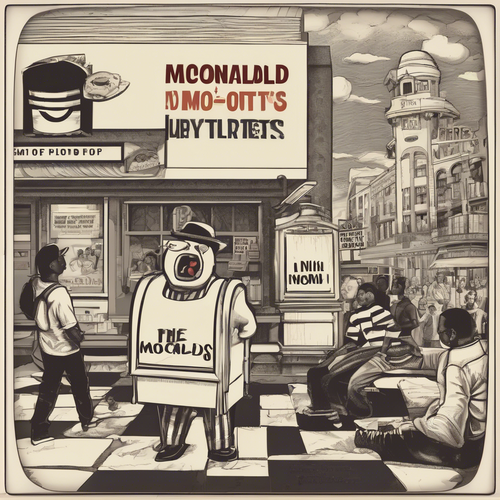
McDonald’s Boycott Starts Today: A Look at the Reasons Behind It and Its Impact in Florida
As the sun rises on a new day, a chorus of voices rises with it, resonating across social media platforms and spilling into the streets: the nationwide boycott of McDonald’s has officially begun. With consumers more empowered than ever, the reasons for the boycott highlight a growing trend of corporate accountability and social responsibility that cannot be ignored. 🍟❌
The decision to launch a boycott against the iconic fast-food titan stems from a series of controversies and decisions deemed unethical by many community activists. Most notably, the outrage centers around the company’s alleged connection to political donations that support initiatives counter to social justice movements and labor rights. As consumers express their discontent, they aim to make a significant impact on the corporation’s operations and image.
What Sparked the Outrage? 🔥
The seeds of the boycott were planted in recent months, fueled by revelations about corporate practices and financial contributions. Specifically:
- Political Donations: Many consumers are alarmed by reports indicating that McDonald’s has funneled money into political campaigns that undermine social justice reform efforts. This has drawn ire from activists advocating for racial equality and labor rights, who argue that such actions are at odds with the company’s advertised commitment to corporate social responsibility.
- Low Wages for Workers: Fast food employees have long been the face of low-wage labor in America. Protesters argue that McDonald’s consistently resists raising wages, despite its significant profits. The demand for a $15 minimum wage resonates strongly, as low wages continue to put a strain on workers’ ability to provide for their families. 🥴
- Environmental Concerns: As climate change becomes an increasingly pressing issue, many consumers are also calling for corporations to adopt more eco-friendly practices. Critics cite McDonald’s reliance on single-use plastics and beef production as factors contributing directly to environmental degradation, driving a wedge between the fast-food chain and environmentally conscious consumers.
The Numbers Behind McDonald’s in Florida 🌴
As the boycott takes flight, Florida is an essential battleground, home to a staggering 1,000 McDonald’s locations. This figure makes the state one of the largest markets for the fast-food chain in the U.S. With this many outlets at stake, the potential financial implications of the boycott could be significant, particularly in cities such as Miami, Orlando, and Tampa where fast food is a key player in community dining experiences.
Local activists are already organizing to amplify their message, asking for customers to find alternative dining options, thereby disrupting McDonald’s daily revenue streams. Additionally, social media campaigns are bolstered by influential figures and organizations advocating for change, harnessing the collective power of the consumer to instigate corporate reform.
A Broader Movement 🌍
The push against McDonald’s is far from an isolated incident; it is part of a broader consumer movement advocating for more ethical corporate behavior across industries. Eating habits, purchasing decisions, and consumer activism are intertwining in unprecedented ways, compelling corporations to place ethical considerations at the forefront of their business models. From calls for fair wages to environmentally sustainable practices, today’s consumers increasingly expect brands to align with their values.
The Road Ahead 🚦
As the boycott marches on, it remains to be seen whether McDonald’s will respond with changes that satisfy the voices demanding action, or whether the company will try to weather the storm and ride it out. A successful boycott could set the stage for future activism, igniting movements against other major corporations that have not yet faced similar scrutiny.
The impact of the boycott is not merely economic; it represents a significant shift in how consumers view and interact with corporations. The future of corporate accountability is an evolving narrative, and today marks an important chapter in that story. 📖✊



I cant believe people are boycotting McDonalds! Do fast food chains really have that much influence on social movements? 🍔🤔
I dont get the hype. McDonalds boycott in Florida? Seems like a stretch. Whats next, boycotting fries for being too crispy? 🍟