

Trump’s Call to Action: National Guard Deployed in LA Amid Immigration Protests
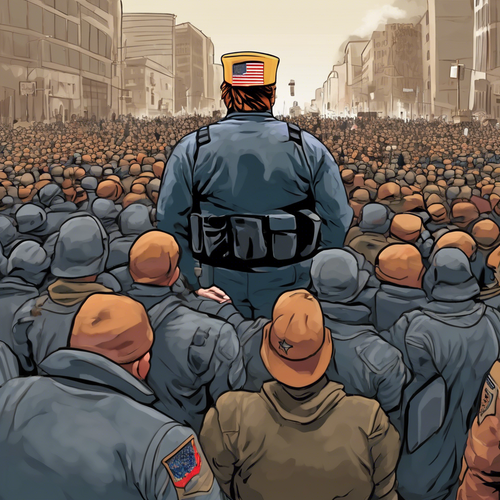
In a move that sent shockwaves through the political landscape, former President Donald Trump has called for the National Guard to be deployed in response to a surge of anti-immigration protests in Los Angeles. This unprecedented action has ignited debates about state versus federal authority, the right to protest, and the ongoing complexities surrounding immigration policy in America. 🗽
Protests Sweep Los Angeles
The protests, which erupted over the weekend, were ignited by growing tensions around immigration enforcement and policies perceived as harsh or ineffective. As thousands took to the streets of Los Angeles, chants for justice and reform filled the air. According to local reports, participation exceeded 10,000, making it one of the largest immigration-related demonstrations in recent history. 🛑
While many protested peacefully, instances of conflict with law enforcement strained the atmosphere, prompting Trump’s intervention. His call for the National Guard was framed as a necessary measure to maintain public order, but critics argue it was an overreach and a provocation that could further inflame tensions. ⚖️
The Legal Landscape: Understanding Florida’s Protesting Laws
As the nation grapples with the implications of such federal actions, it’s worth examining how different states handle protesting rights. Florida’s laws, in particular, offer a window into the balance between civil rights and state authority. The state has faced scrutiny for its stance on protests, especially after the passage of legislation aimed at increasing penalties for demonstrators. 📜
Key Aspects of Florida’s Protest Laws
- Permit Requirements: Florida typically requires permits for large gatherings, particularly those that may disrupt traffic or require police presence. This applies to protests seeking to obtain city-authorized permissions for legality.
- Increased Penalties: Following heightened tensions from protests in 2020, Florida introduced laws that impose stricter penalties for activities deemed as “unlawful” protests. Violating ordinances during protests can incur fines or criminal charges.
- Protection of Statues and Monuments: Florida law includes provisions that protect monuments, making it illegal to damage or destroy them during demonstrations, potentially criminalizing aspects of protests advocating for racial justice.
- Anti-Mask Laws: In certain contexts, it is illegal for individuals to wear masks during a protest, justified by officials citing public safety; however, critics argue this infracts on individual rights to anonymity in protest.
The National Guard’s Role in Civil Unrest
Calling in the National Guard during civil protests is not without precedent, but it raises significant questions concerning military jurisdiction in civilian matters. The National Guard, primarily a reserve military force, is designed to assist in emergencies—be they natural disasters or civil disturbances. Nonetheless, its involvement in protests can provoke concerns over the militarization of civilian spaces and the potential for violent escalations. 🔍
According to a report from the Council on Foreign Relations, “using the National Guard to curb civil unrest can lead to public distrust of law enforcement and government at large, particularly among communities already marginalized.” This sentiment has been echoed by many civil rights advocates, who see the deployment as a sign of governmental failure to engage in dialogue and address community concerns.
What Lies Ahead?
As the situation in Los Angeles develops and Florida’s laws continue to take shape, the tension between state handling of protests and federal intervention will likely remain a focal point in national discourse. Will Trump’s call for the National Guard be seen as a protective measure, or a dangerous precedential shift? And how will states like Florida navigate the waters of protest rights as they seek to balance public order and civil liberties? Answers to these questions will shape not only current political realities but also future generations’ understanding of protest and civil rights in America. 🤔



Do you think deploying the National Guard during protests is necessary? I feel conflicted about it. What do you all think?
Do you think deploying the National Guard is the right move in handling immigration protests? Lets discuss!
Do you think the National Guard deployment is the right move or an overreaction to the immigration protests in LA? #DebateTime
Do you think deploying the National Guard in response to immigration protests is an overreaction or necessary measure? Lets discuss!
Are we really okay with the National Guard being deployed for immigration protests? Seems like a slippery slope. #controversial #debate
Do you think deploying the National Guard in response to immigration protests is necessary or an overreach of power? Lets discuss!